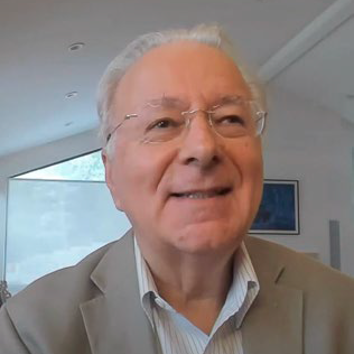
Federico Faggin, president of Federico and Elvia Faggin Foundation | Impresa&Imprese 1/2021
The Digital Renaissance in Italy is a real possibility, and even with due proportion, it will be able to bring back an awareness and capacity for imagination very similar to those that in the past ensured our awakening from the torpor of the Middle Ages.
Federico Faggin, President of Federico and Elvia Faggin Foundation
One of the issues that scientists and artificial intelligence professionals have always pondered is the possibility of the day when machines will succeed in permanently supplanting humans. The topic, which touches on many issues of economic restart, has produced two well-defined camps over the years: the first proposes an "apocalyptic" view that sooner or later machine intelligence will succeed in surpassing that of man; the second, on the other hand, considers this prediction unfeasible. To the latter line of thought belongs Federico Faggin, inventor of the first microprocessor in history, the Intel 4004. A physicist, a man of science, and a successful entrepreneur, Faggin, in recent years, has devoted much of his time to analyzing the relationship between human beings and machines and the impact they can have on the way people think, act, and feel.
According to Faggin, it is possible in Italy to launch a new Renaissance that, albeit with due proportion, will be able to bring back an awareness and capacity for imagination very similar to those that in the past ensured our awakening from the torpor of the Middle Ages.
"From a personal point of view, I can say that I have lived four lives, and each one has taught me something. The first life is about Vicenza, the place where I grew up, studied and had my first work experiences. My second life began in '68, when I left for the United States, heading for Silicon Valley. Here I found a very different language and culture than what I was used to, and I made important inventions such as MOS technology. My third life was that of an entrepreneur: during this experience I headed four companies, learned to "open my belly" and find the courage to take my own risks. Then, 30 years ago, I discovered the heart. An extraordinary experience in which I learned to observe the world. This was the period when I realized that computers can surpass us in the mechanical part, but not in the creative part. Then began my "Renaissance," a time when, starting from my own person, I began to study the nature of consciousness and discovered that each one of us, within ourselves, has an exceptional power made up of creativity and visionary ability.
To think that mechanical intelligence can surpass human intelligence is a great misconception born of the idea that what lies behind progress is competition and not cooperation. The latter has enabled us to achieve great things, while competition has always led us only to wars. The real difference lies in the fact that lived reality, the reality we go through and draw on every day, allows us to collect experiences that the mechanical structure cannot comprehend. Consciousness, then, is the feature that marks the fundamental difference between computers and human beings.
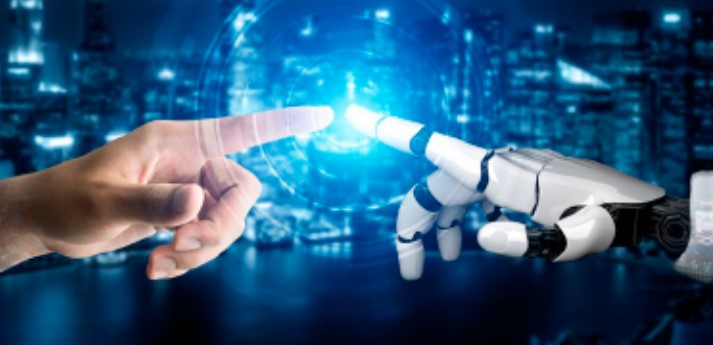
But what is consciousness? When we smell a rose, we perceive the scent by means of electrical signals that come from olfactory receptors. This is objective information that, within our consciousness, is translated into subjective feelings. As human beings we perceive reality through thoughts, feelings, emotions. Elements far removed from the ordinary experience of the physical world. By consciousness then, we mean our ability to experience feelings, emotions, thoughts. We could teach robots to recognize all the molecules that make up the smell of a rose, but no robot will ever be aware of the smell of a rose in terms of sensation, emotion.
The idea that computers can surpass humans is a vision that robs us of power, freedom and humanity, or the qualities that make up our consciousness.
This inwardness, this "internal" and inquisitive reality that can only be discovered by looking inside ourselves, is the input that enables man to govern the complex mechanisms of machines and push them to accomplish something creative.
The idea that computers can overtake humans is a vision that robs us of power, freedom and humanity, the qualities that make up our consciousness. The threats to be averted are not advances in robotics and artificial intelligence, but the possibility of men of ill will ruling the machines. In this case, however, it will be man, not machine, that will have caused the problem.
Head, belly and heart represented the foundations of the Renaissance. The head was the intellectual center of reason; the belly the center of action and will; the heart the center of empathy, compassion and cooperation. The latter is the only element that can harmonize the first two and without which it is inevitable to give in to selfishness or unbridled competition. We humans possess the qualities to do good, but we must believe in them. Without this optimism, which also comes from the heart, we will always find excuses not to do anything. And evil will continue to run rampant as it does throughout the world.
Renaissance is first of all exploring within ourselves: love is known by loving, courage is discovered by taking risks, and intuition and creativity are born by opening up to mystery, asking intelligent questions, and asking for help from those who can guide us. Italy is perfectly positioned for this to happen, but we need to recover the enthusiasm, the desire to react, and the willingness to abandon old patterns to make room for new perspectives."
Watch the video related to Federico Faggin's speech during "Digital Renaissance - What Intelligence for Recovery?", the event promoted by the Professional Services Sector of Confindustria Emilia, in collaboration with 15 other territorial branches of the System, which was held on Oct. 6, 2021 at the Military Academy in Modena.


 ai translated